You check your glucose an hour after lunch and the number is higher than you expected, even though you felt like you ate carefully. It's one of the most common questions people with diabetes ask, in one form or another: why does this keep happening, and is it something to worry about?
The short answer is that a rise after eating is normal and expected, for everyone, not just people with diabetes. The more useful answer is what shapes how big that rise is, and when a pattern is worth a closer look rather than a one-off.
What actually happens in your body after a meal
When you eat, your digestive system breaks carbohydrates down into glucose, which enters your bloodstream. In someone without diabetes, the pancreas responds by releasing insulin, which moves that glucose out of the blood and into cells for energy or storage. Glucose levels rise for a short period after eating, then settle back down.
Diabetes changes this process in different ways depending on type. In Type 1 diabetes, the pancreas produces little or no insulin, so the body depends on insulin taken from outside to manage the rise. In Type 2 diabetes, the body still produces insulin but doesn't respond to it as effectively, a state known as insulin resistance, so glucose stays elevated for longer and the rise can be sharper. In both cases, food is only one input among several, which is why two similar meals can produce two different readings.
What counts as a normal rise
Glucose typically starts rising within 15 to 30 minutes of eating, peaks somewhere between 60 and 90 minutes afterwards, and returns toward baseline over the following one to two hours. The exact numbers that count as "in range" for you specifically are individual, set with your care team based on your diabetes type, treatment and other health factors, so there's no single figure that applies to everyone.
What matters more than any single reading is the pattern over time: whether your post-meal numbers are consistently higher than your personal target, whether they're climbing compared with a few weeks ago, and how long they take to come back down. A single higher-than-usual reading after one meal is rarely meaningful on its own.
Five everyday things that make the spike bigger than expected
The same carbohydrate count can produce noticeably different results depending on a few factors that are easy to overlook:
- What's in the meal. Refined carbohydrates and sugary drinks are digested quickly and raise glucose fast. Fibre, protein and fat slow digestion down, which blunts and spreads out the rise.
- How much you eat. A larger portion of the same food means more total carbohydrate hitting your bloodstream at once, even if the meal "looks" similarly balanced.
- The order you eat in. Some research suggests eating vegetables and protein before the starchy or sugary part of a meal can reduce the size of the spike that follows, compared with eating the same foods in the opposite order.
- Movement before or after eating. Muscles use glucose for fuel, so activity around meal times, even light activity, tends to blunt how high and how long a post-meal rise lasts.
- Sleep, stress and illness. Stress hormones such as cortisol and adrenaline raise blood glucose on their own, independent of what you've eaten. A poor night's sleep or a cold can make an otherwise ordinary meal produce a higher reading than usual.
The short walk effect
One of the simplest, most consistently supported habits for softening a post-meal rise is a short walk. Light movement after eating doesn't require any special routine or equipment, and it's one of the few habits that research keeps coming back to across different studies and different types of diabetes. It isn't a fix for every meal or every day, but it's a reasonable default when it's practical.
Spotting your own pattern, not guessing
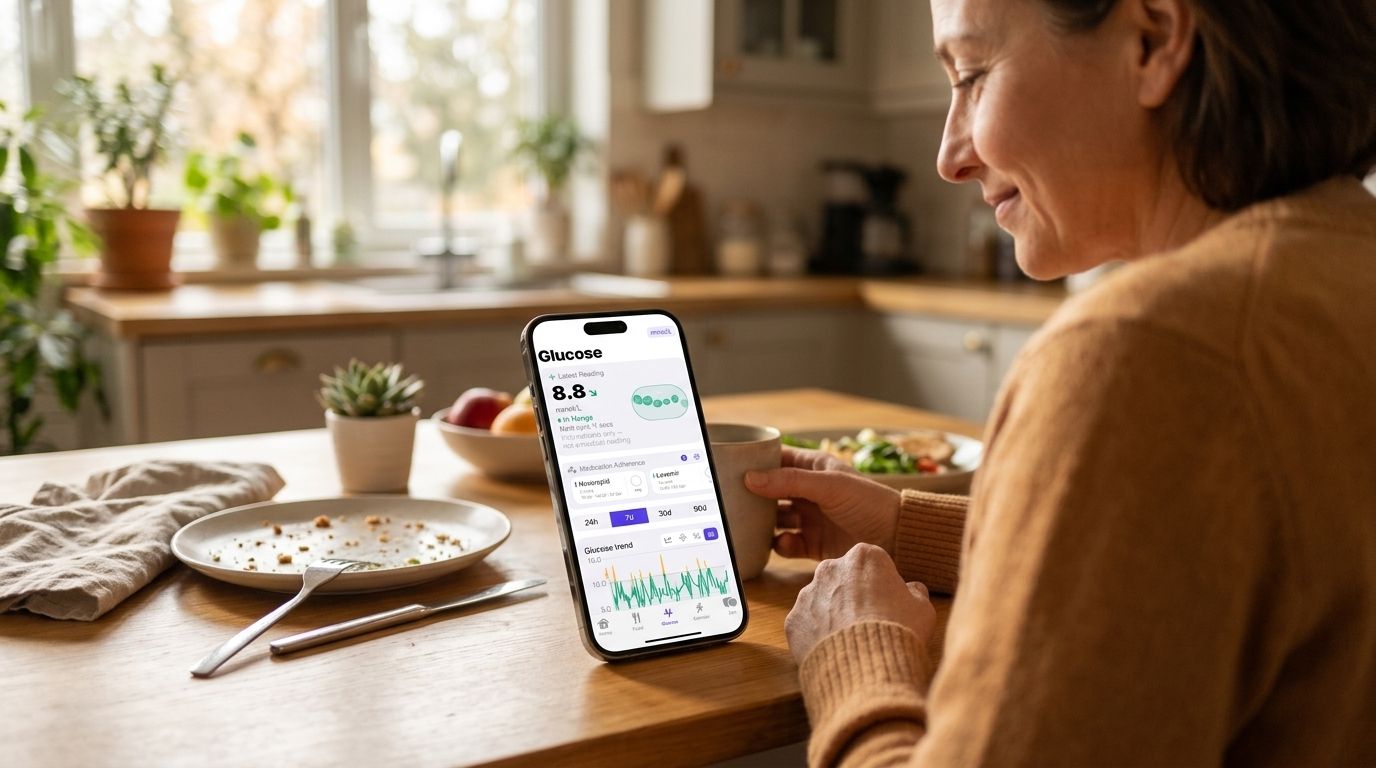
The honest difficulty with all of this is that it's genuinely hard to hold five variables in your head while also living your life. This is the gap GlyBeat is built to close. GlyBeat pulls your glucose readings from Apple HealthKit and lines them up against what you've logged - meals, activity, medication - on one glucose trend view, so a pattern like "my numbers run higher after dinner on days I skip a walk" becomes something you can actually see, rather than something you half-remember.
When a reading doesn't make sense, you can ask Zen, GlyBeat's AI companion, directly: "why did my glucose spike after lunch?" Zen looks at your own recent meals, activity and readings and gives you a plain-English answer grounded in your data, not a generic tip. For the underlying science - how meal order affects absorption, what the research actually says about walking after eating - Sage, GlyBeat's research-focused AI, answers with sources you can check, so you're not relying on forum guesses.
When to flag it to your care team
Occasional higher readings after a particular meal are usually nothing to act on alone. It's worth raising with your GP or diabetes team if you notice spikes that are consistently well above your personal target, readings that take much longer than usual to come back down, or symptoms like unusual thirst, blurred vision or fatigue alongside the pattern. These are conversations for your care team, not something to resolve by adjusting medication or insulin yourself. If you don't currently have easy access to a diabetes specialist or dietitian, GlyBeat's specialist finder can help you locate one near you.